


Prayer Wheel
A prayer wheel is a traditional spiritual tool used in Tibetan Buddhism, designed to amplify the power of prayer and meditation. Typically cylindrical and mounted on a handle, these wheels are inscribed with the sacred mantra “Om Mani Padme Hum” and often contain scrolls of paper or cloth with similar mantras written on them. When spun, it is believed that the prayers are released into the universe, multiplying the effects of the mantra. This practice is seen as a way to accumulate wisdom, purify negativity, and generate good karma.
Prayer wheels come in various sizes, from handheld versions to large, ornate wheels found in monasteries. They are an integral part of Tibetan Buddhist rituals and are revered for their symbolic representation of the Buddha’s teachings. Spinning the wheel with pure intentions is thought to spread compassion and positive energy to all beings, making it a powerful tool for personal and collective spiritual growth.
Showing all 34 results


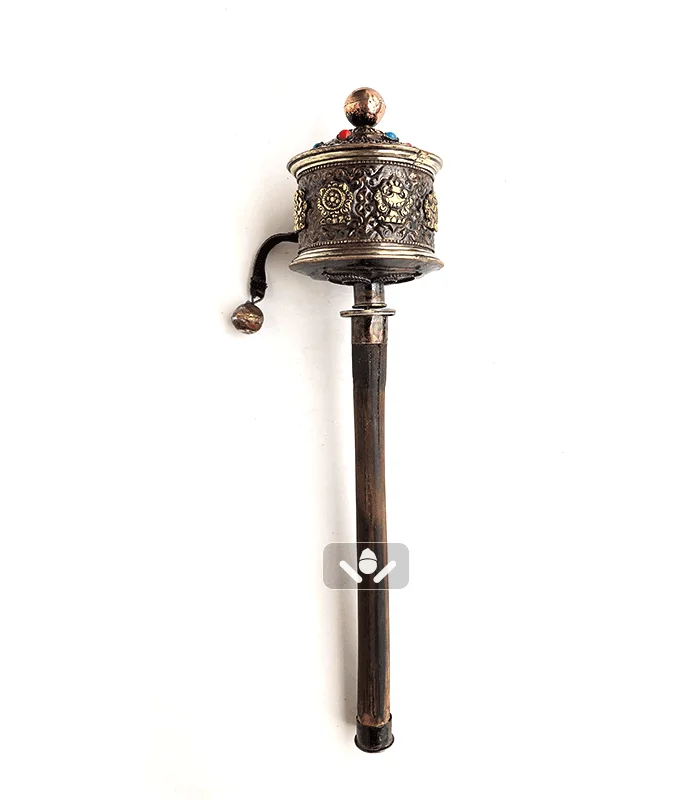


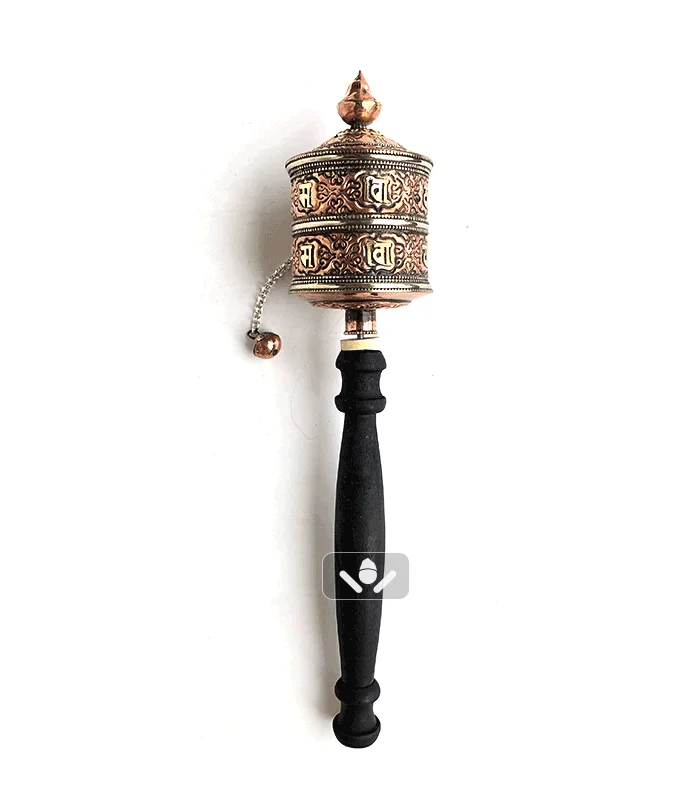


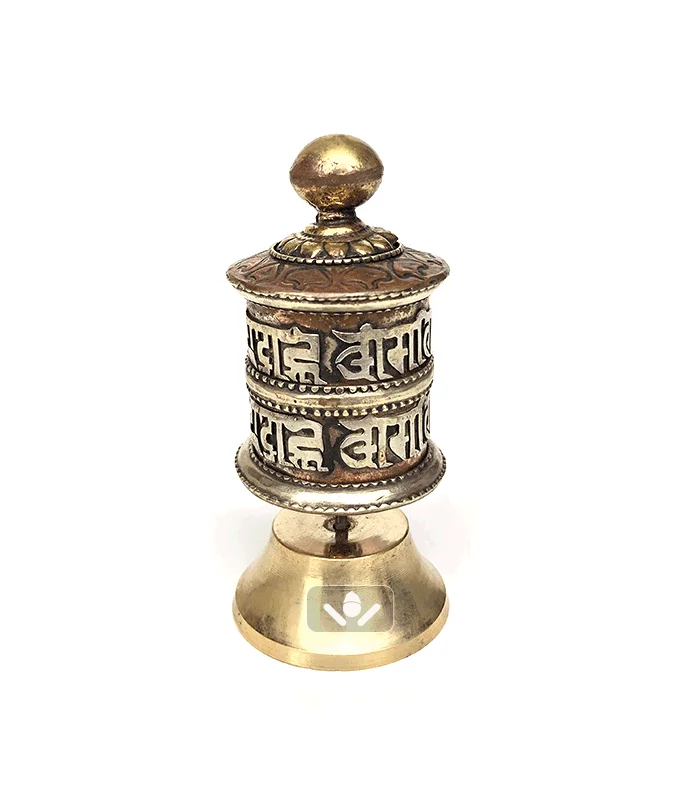


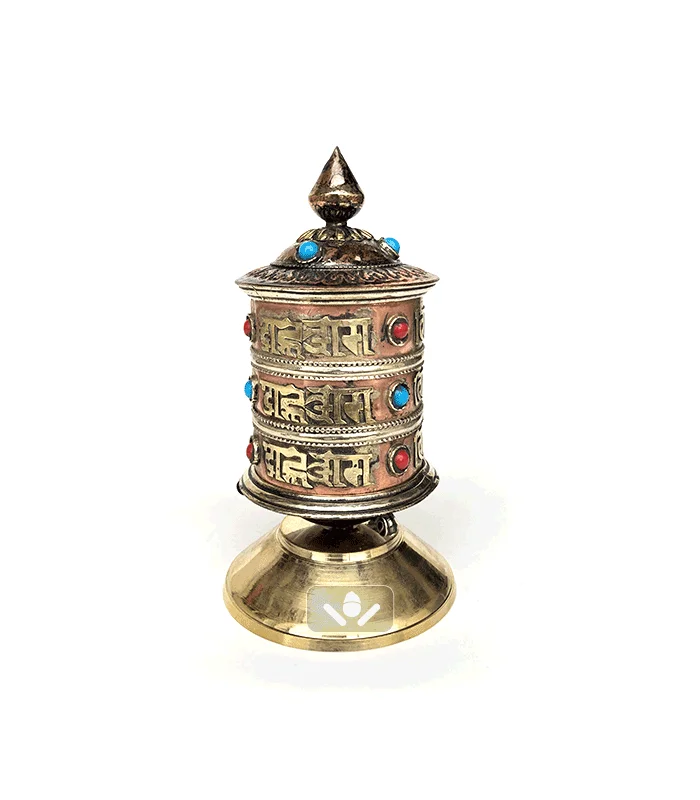


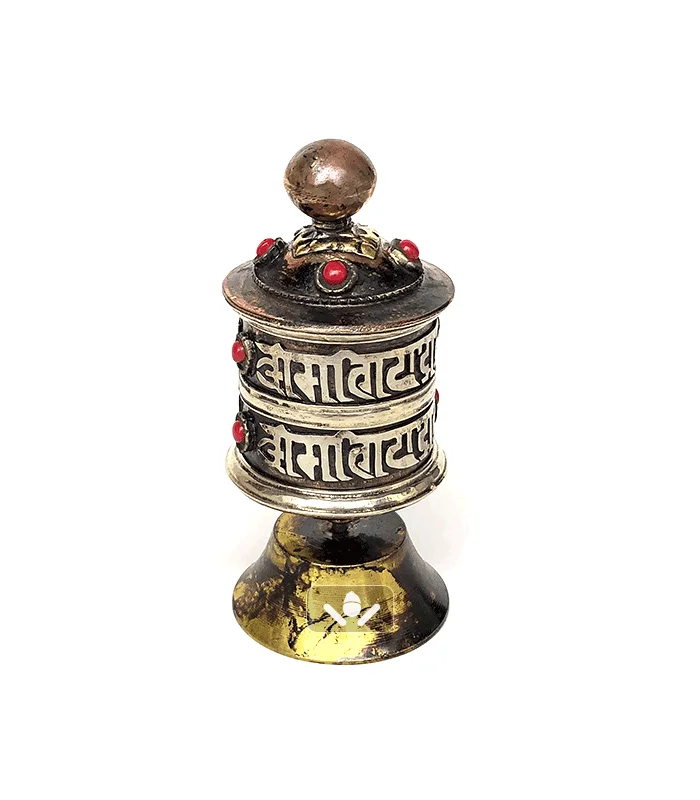


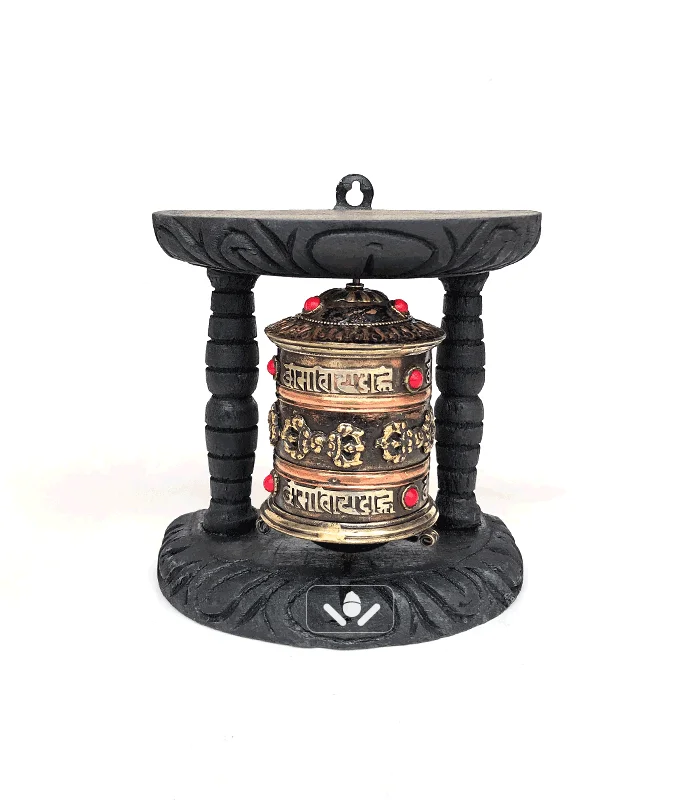


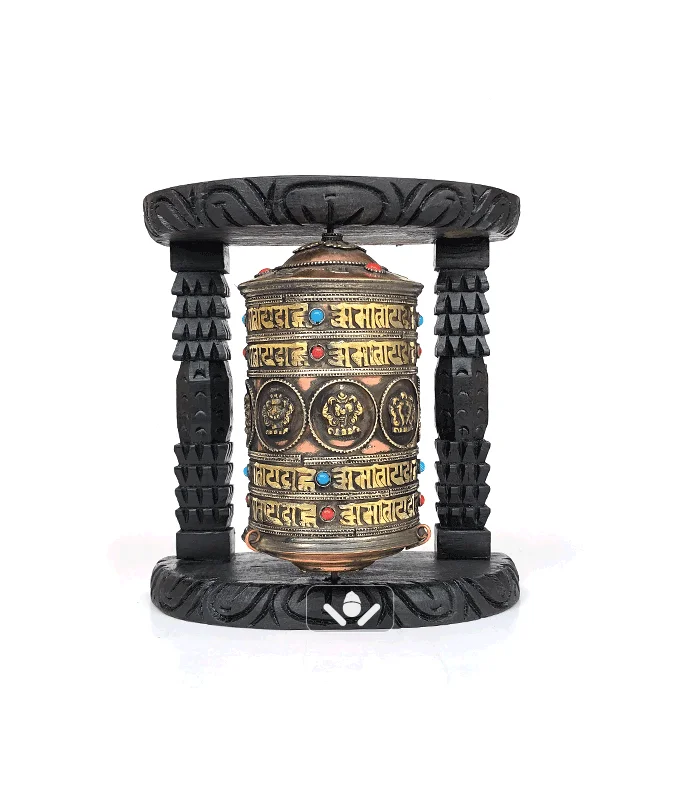
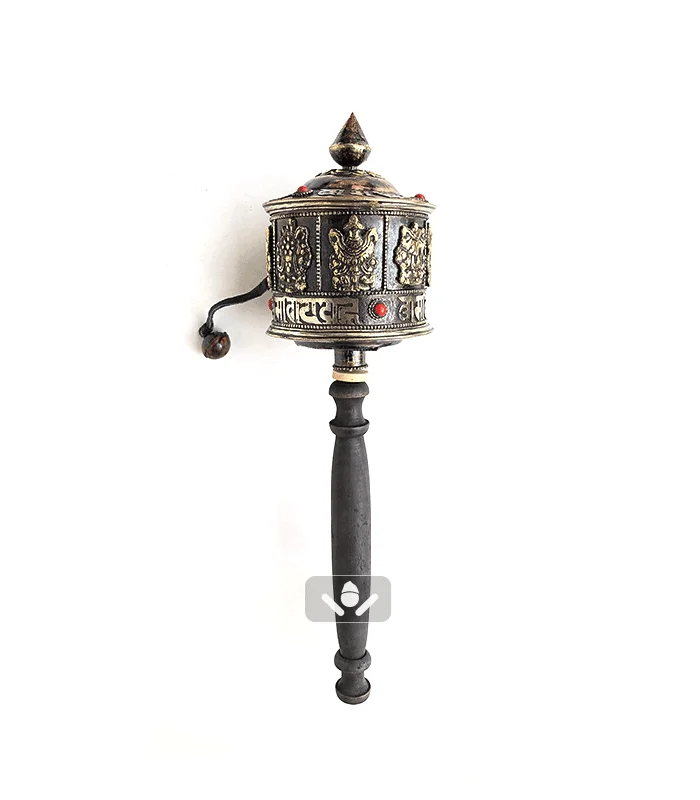


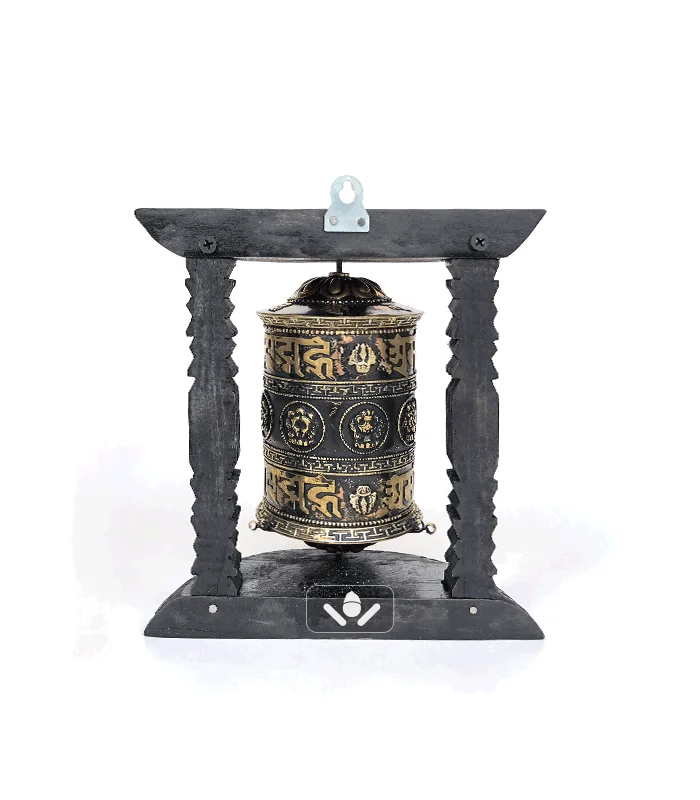
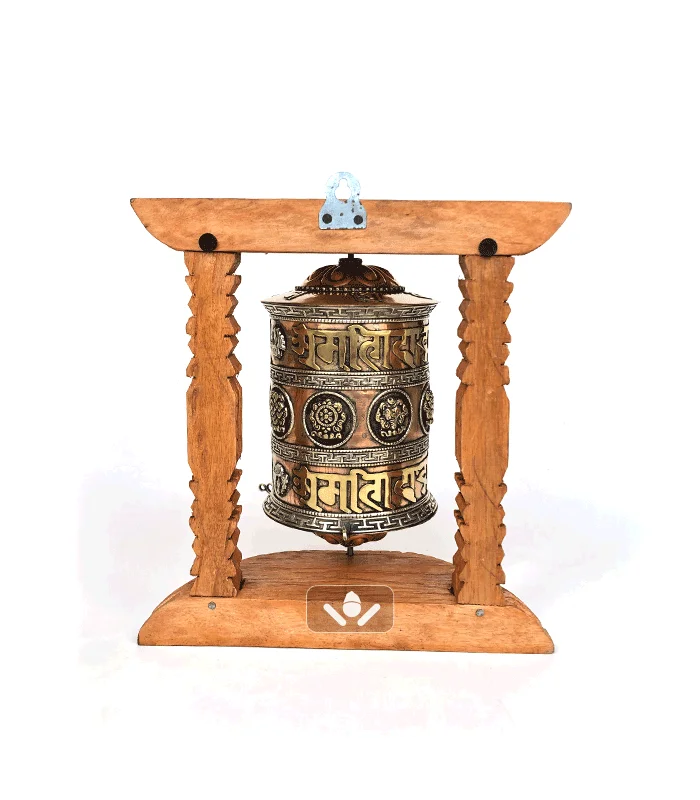
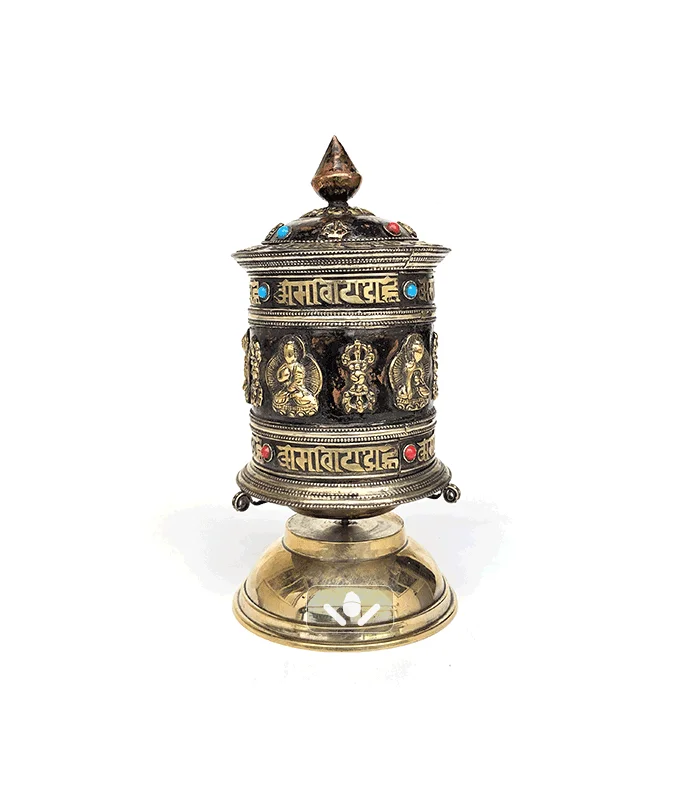


Authentic Handmade Tibetan Prayer Wheels: Direct from Nepali Artisans
Swodeshi is a Nepal-based direct-trade marketplace for authentic Himalayan Buddhist crafts. Every Tibetan prayer wheel in our collection is handmade by artisan families in the Kathmandu Valley in the metalworking districts of Patan and Bhaktapur, and the Buddhist craft communities surrounding Boudhanath Stupa.
When you buy from Swodeshi, you purchase directly from the workshop: no middlemen, no factories, no imitation pieces. Our collection spans 30+ handcrafted prayer wheels from Rs. 600, including handheld, standing, and wall-mounted styles in copper, brass, and silver-finished metal.
What Is a Prayer Wheel?
A Tibetan prayer wheel, also called a Mani Wheel or Wheel of Dharma, is a cylindrical spinning device central to Tibetan Buddhist practice. The outer surface is inscribed with the sacred mantra "Om Mani Padme Hum," and the interior contains tightly rolled paper scrolls bearing the same mantra thousands of times. Spinning the wheel clockwise is considered equivalent to reciting those prayers aloud, releasing their merit into the world.
Prayer wheels have been used across the Himalayas for more than a thousand years. They represent the turning of the Wheel of Dharma, the spread of Buddha's teachings throughout the world. In Nepal, you encounter them at every scale: massive stone wheels at monastery entrances, small brass wheels in family homes, and long rows of copper wheels lining the circumambulation paths around Boudhanath and Swayambhunath stupas.
The mantra "Om Mani Padme Hum" translates broadly as an invocation of the jewel of compassion in the lotus, the core teaching of Avalokitesvara, the bodhisattva of compassion. Each of the six syllables is associated with purifying a different negative tendency and transforming it into a positive quality.
The Meaning and Tradition Behind Prayer Wheels
Prayer wheels are always spun clockwise — the direction the sun moves across the sky, and the direction in which Buddhist mantras are written. This alignment with natural motion is intentional: the clockwise spin follows the flow of sacred energy as understood within Tibetan Buddhist cosmology.
Nepal has been one of the world's most important centres for Tibetan Buddhist metalcraft for centuries. The artisan districts of Patan (Lalitpur) and Bhaktapur are home to metalworking families who have passed down skills across generations: lost-wax casting, hand-chasing, repoussé work, and the fine engraving of Buddhist iconography, including the Astamangal (eight auspicious symbols), Bajra (thunderbolt), and Om Mani Padme Hum mantra in Tibetan and Lantsa scripts.
At Swodeshi, we work directly with these artisan communities so that every prayer wheel you receive carries genuine craft knowledge — not a factory reproduction. The difference is visible in the weight of the metal, the depth of the engraving, and the precision of the spin.
Types of Prayer Wheels Available at Swodeshi
Our collection includes handheld, tabletop, standing, and wall-mounted prayer wheels for meditation practice, home altars, sacred spaces, and gifting. All wheels are inscribed with Om Mani Padme Hum and made from genuine copper, brass, or silver-finished metal.
Handheld Prayer Wheels - For Daily Practice & Travel
A handheld prayer wheel, also known as a hand mani wheel, is the most personal form of prayer wheel. Held in one hand and spun gently while walking, meditating, or chanting, it becomes a steady companion in daily spiritual life. Lightweight and portable, handheld prayer wheels are ideal for meditation practice, travel, or simply carrying the habit of mindfulness through the day.
| Product | Price (USD)(Estimated) | Price (NPR)(Estimated) |
| Copper Handheld Prayer Wheel — 2-line Om Mani engraving, 11.8" | $12.20 | NPR 1,530 |
| Copper Handheld Prayer Wheel — 2-line Om Mani engraving, 11" | $10.40 | NPR 1,305 |
| Astamangal Handheld Prayer Wheel with Wood Handle — 13.8" | $16.50 | NPR 2,070 |
| Compact Copper Handheld Prayer Wheel — Om Mani 2-line | $6.10 | NPR 765 |
| Copper Handheld Prayer Wheel — 2-line, 35 cm | $20.45 | NPR 2,565 |
| Copper Handheld Prayer Wheel — Heavy gauge copper, 2-line | $22.25 | NPR 2,790 |
| Copper Handheld Prayer Wheel — Standard, 2-line | $20.10 | NPR 2,520 |
| Silver-Finish Handheld Prayer Wheel — 2-line engraving | $22.25 | NPR 2,790 |
| Astamangal Handheld Prayer Wheel with Carved Wood Handle | $30.50 | NPR 3,825 |
Standing Prayer Wheels - For Home Altars & Meditation Rooms
Standing prayer wheels are designed for permanent placement — on a home altar, in a meditation room, in a temple, or as a centrepiece in a sacred space. They stand independently and are spun when you pass, creating a continuous cycle of prayer energy in the room. Many standing models combine multiple lines of mantra engraving with decorative Buddhist symbolism.
| Product | Price (USD)(Estimated) | Price (NPR)(Exact) |
| Brass Tabletop Prayer Wheel — Round top, 2-line mantra, compact altar piece | $5.45 | NPR 684 |
| Astamangal Standing Prayer Wheel — SIKU metalwork, 8 auspicious symbols | $17.95 | NPR 2,250 |
| Copper Standing Prayer Wheel — 3-line mantra, stone inlays | $16.50 | NPR 2,070 |
| Copper Standing Prayer Wheel — 3-line mantra, no stones | $16.50 | NPR 2,070 |
| Brass Standing Prayer Wheel — Large 3-line mantra, altar centrepiece | $61.00 | NPR 7,650 |
| Brass Tabletop Prayer Wheel — 3.7" compact stand | $4.75 | NPR 594 |
| Brass Tabletop Prayer Wheel — 3.7" with gemstone inlay | $5.75 | NPR 720 |
| Astamangal Standing Prayer Wheel — 8 auspicious symbols, engraved | $34.45 | NPR 4,320 |
| Astamangal Standing Prayer Wheel — SIKU metalwork variant | $17.95 | NPR 2,250 |
| Buddha Standing Prayer Wheel — Buddha face motif, meditation-focused | $18.30 | NPR 2,295 |
| Buddha & Bajra Standing Prayer Wheel — Dual motif, ritual use | $51.70 | NPR 6,480 |
| Two-Pillar Standing Prayer Wheel — Traditional framed altar setting | $33.00 | NPR 4,140 |
| Brass Setting Stand Prayer Wheel — Decorative base | $9.20 | NPR 1,152 |
Wall-Mounted & Decorative Prayer Wheels — For Sacred Spaces & Display
Wall-mounted prayer wheels are fixed to walls in temples, corridors, entryways, or meditation spaces, so they can be spun by anyone who passes. Decorative prayer wheels serve a dual purpose: as a functioning spiritual tool and as a piece of traditional Himalayan art. Many feature intricate engravings of Buddhist iconography, Astamangal symbols, and Bajra (thunderbolt) motifs.
| Product | Price (USD) | Price (NPR)(Exact) |
| Copper Wall Prayer Wheel — 3-line Om Mani Padme Hum, medium | $7.17(estimated) | NPR 900 |
| Copper Prayer Wheel — Buddha words engraving, 3.5" | $4.30(estimated) | NPR 540 |
| Brass Wall/Table Prayer Wheel — 4.3", Om Mani engraving | $6.75(estimated) | NPR 846 |
| Bajra Prayer Wheel — 5.1", thunderbolt motif, wall display | $14.35(estimated) | NPR 1,800 |
| Astamangal Prayer Wheel — 5.5", 8 auspicious symbols, wall | $16.50(estimated) | NPR 2,070 |
| Bajra Prayer Wheel — 5.5", larger thunderbolt motif | $16.50(estimated) | NPR 2,070 |
| Buddha Prayer Wheel with Full Carving — 5.5", decorative centrepiece | $18.30(estimated) | NPR 2,295 |
| Astamangal Prayer Wheel — 7.1", large wall display | $32.30(estimated) | NPR 4,050 |
| Antique-Finish Prayer Wheel — 7.9", aged copper patina | $24.40(estimated) | NPR 3,060 |
| Astamangal Prayer Wheel — 7.9", large, 8 auspicious symbols | $34.45(estimated) | NPR 4,320 |
| Astamangal Wall Prayer Wheel — Antique finish | $28.70(estimated) | NPR 3,600 |
| Astamangal Wall Prayer Wheel — Regular copper finish | $28.70(estimated) | NPR 3,600 |
Why Buy a Prayer Wheel from Swodeshi?
There are many places online to buy a prayer wheel. Most are resellers, marketplace aggregators, or importers who buy in bulk from factories and add a margin. Swodeshi is different in one specific way: we buy directly from the artisan families in the Kathmandu Valley who make these pieces by hand.
| What Makes Swodeshi Different | What This Means for You |
| No middlemen — direct from artisan workshops in Patan and Bhaktapur | Artisans receive fair compensation; you pay less than retail chain prices |
| Every piece individually assessed for authenticity and quality | No defective or factory-replicated items reach your order |
| Real materials copper, brass, silver-finish. No plastic, no plating over pot metal | Your prayer wheel will last for decades with basic care |
| Hand-packed in Kathmandu with full international tracking | Orders typically arrive within 5–14 working days, trackable end-to-end |
| Real human support at [email protected] or WhatsApp +977-9741802999 | You can ask questions before and after purchase, in plain language |
How to Choose the Right Prayer Wheel
Prayer wheels are not one-size-fits-all. The right choice depends on how you intend to use it, where you plan to keep it, and how much spiritual significance the specific design holds for you. Here is a practical guide to the key differences.
Handheld vs Standing vs Wall-Mounted: Core Differences
| Type | Best For | Typical Size Range |
| Handheld (Hand Mani Wheel) | Daily meditation, travel, personal practice, beginners | 11" – 14" |
| Standing (Tabletop/Altar) | Home altars, meditation rooms, temples, permanent placement | 3.7" – 12" |
| Wall-Mounted / Decorative | Corridors, entryways, sacred wall displays, gifting | 3.5" – 8" |
Choosing by Material
Copper prayer wheels are the most traditional and the most common in Nepali workshops. Copper is considered a spiritually conductive metal in Buddhist metalwork, it holds engravings well and develops a natural patina over the years of use that many practitioners consider beautiful.
Brass prayer wheels are slightly heavier and more golden in appearance. They are popular for standing and tabletop pieces because the weight gives them stability. Brass is also more resistant to surface marks from handling.
Silver-finished prayer wheels have a brighter, more reflective surface. They are often given as gifts for their visual impact. The finish is applied over brass or copper, so the underlying quality of the base metal still matters. We use genuine metal, not plastic cores.
Choosing by Design: Astamangal, Bajra, and Buddha Motifs
The Astamangal (eight auspicious symbols) design features eight sacred Buddhist symbols: the parasol, golden fish, treasure vase, lotus, conch shell, endless knot, victory banner, and dharma wheel. This design is considered particularly auspicious and is a popular choice for home altars and gifts for Buddhist practitioners.
Bajra (thunderbolt or dorje) designs carry the symbolism of indestructible truth and the cutting away of ignorance. The Bajra is one of the most powerful symbols in Vajrayana Buddhism. Prayer wheels with Bajra motifs are often used in more formal ritual settings.
Buddha-motif prayer wheels feature either the Buddha face or scenes from the Buddha's life. These are popular as altar centrepieces and are often chosen as first prayer wheels by people coming to Buddhist practice from a secular background.
For Gift-Buying: What to Consider
Prayer wheels are one of the most meaningful spiritual gifts you can give — they carry continuous intention even when not in active use. When buying as a gift, consider the recipient's living situation. A handheld prayer wheel suits someone who meditates regularly or travels often. A small standing piece (3.7" to 5.5") is ideal for a desk or shelf. A wall-mounted wheel makes a statement piece for someone with a dedicated practice space.
If you are unsure of the recipient's background or whether they follow Buddhist practice, an Astamangal or Buddha motif prayer wheel is universally meaningful without requiring prior knowledge of specific symbolism. Any wheel inscribed with Om Mani Padme Hum is appropriate regardless of the buyer's or recipient's religious background.
Ordering, Shipping & Returns
| Detail | Information |
| Shipping origin | Hand-packed in Kathmandu, Nepal |
| Delivery time | 5–14 working days internationally (US, UK, EU, Australia, Canada) |
| Tracking | Full tracking included with every order |
| Import duties | May apply depending on your country. Contact us before ordering for guidance on your specific market. |
| Contact | [email protected] | WhatsApp +977-9741802999 |
FAQs: Tibetan Prayer Wheels
What is a prayer wheel used for?
A prayer wheel is used in Tibetan Buddhist practice to accumulate merit, purify negative karma, and generate a meditative state through physical devotion. Spinning it clockwise is believed to be equivalent to reciting the mantras inscribed inside — the Om Mani Padme Hum mantra — aloud. Each full rotation releases the blessing of the mantras into the surrounding environment, benefiting all beings in the vicinity.
Do prayer wheels really work?
In Tibetan Buddhism, spinning a prayer wheel is a physical act of devotion believed to release the merit of the mantras inscribed inside — equivalent to reciting them aloud. Modern practitioners often report that the rhythmic spinning creates meditative focus, reducing anxiety and improving mindfulness. Whether approached spiritually or secularly, prayer wheels have been used for over a thousand years as a tool for mental centering and positive intention. Their value is both cultural and psychological.
What is the prayer wheel in Nepal?
In Nepal, prayer wheels are sacred cylindrical devices inscribed with mantras, used throughout Tibetan Buddhist practice. You find them at major spiritual sites including Boudhanath Stupa and Swayambhunath in Kathmandu, in the monasteries of Patan and Bhaktapur, and in family homes across the Himalayan region. Nepal — particularly the artisan districts of Patan (Lalitpur) — has been one of the world's most important centres for handcrafted prayer wheels for centuries.
Can anyone use a prayer wheel?
Yes. Prayer wheels can be used respectfully by anyone, regardless of their religious background or level of Buddhist knowledge. The physical act of spinning clockwise with a calm, positive mindset is all that is required. Many people who are not Buddhist practitioners use prayer wheels for their meditative and mindfulness benefits.
Which direction do you spin a prayer wheel?
Always clockwise — the same direction as the sun's movement across the sky and the direction in which Tibetan Buddhist mantras are written. Spinning a prayer wheel clockwise is believed to release the spiritual merit of the mantras correctly. Spinning it counterclockwise is considered improper in most Tibetan Buddhist traditions and is thought to negate the intended benefit.
What happens if you spin a prayer wheel counterclockwise?
In most Tibetan Buddhist traditions, spinning a prayer wheel counterclockwise is considered spiritually incorrect and may negate the intended merit. The clockwise direction aligns with the movement of the sun and the way sacred mantras are written. Some rare tantric practices in specific sects may use counterclockwise spinning for particular rituals, but this is the exception rather than the rule and is not applicable to standard prayer wheel use.
Which religion uses the prayer wheel?
Prayer wheels are primarily associated with Tibetan Buddhism and the broader Vajrayana Buddhist tradition. They are commonly used in Tibet, Nepal, Bhutan, Mongolia, and parts of India (including Ladakh and Sikkim). The prayer wheel represents the turning of the Wheel of Dharma — the ongoing spread of Buddha's teachings across the world.
Where should a prayer wheel be placed at home?
Place a prayer wheel in a clean, peaceful area of your home — ideally in a prayer room, meditation space, or on an altar. Avoid placing it on the floor, near shoes, bathrooms, or areas of heavy foot traffic. The space does not need to be large; even a small dedicated shelf or corner is appropriate. The wheel should be treated with the same care as any sacred object.
What mantra is inside a prayer wheel?
The most common mantra inside a prayer wheel is Om Mani Padme Hum — a six-syllable mantra associated with Avalokitesvara, the bodhisattva of compassion. It is considered one of the most powerful mantras in Tibetan Buddhism. The mantra is written on paper scrolls wound tightly and placed inside the cylindrical body of the wheel, sometimes thousands or millions of times.
How is a prayer wheel filled?
A prayer wheel is filled with tightly rolled paper scrolls (mantra papers) containing the Om Mani Padme Hum mantra repeated many times. In traditional Tibetan Buddhist practice, these scrolls are blessed by a lama before being sealed inside. The prayer wheels from Swodeshi come filled with mantra paper scrolls as part of the traditional crafting process.
What are prayer wheels made of?
Traditional Tibetan prayer wheels are made from copper, brass, silver, wood, or gold-plated metals. At Swodeshi, our prayer wheels use genuine copper, brass, and silver-finished metal — not plastic, not painted replicas. The outer surface is hand-engraved by artisans in the Kathmandu Valley with mantras, Buddhist symbols, and decorative motifs.
How many times should you spin a prayer wheel?
There is no fixed number — you can spin a prayer wheel as many times as you like. Each full clockwise rotation is considered to release the blessing of all the mantras contained inside. Some practitioners spin while walking a full circumambulation of a stupa; others spin for a set period during meditation. The most important element is the mindset of calm, positive intention during spinning.
Can a prayer wheel be given as a gift?
Yes. Prayer wheels are widely considered among the most meaningful spiritual gifts in Himalayan Buddhist culture. They are given at housewarmings, festivals, birthdays, and as expressions of goodwill. There is no requirement for the recipient to be a Buddhist practitioner — the symbolism of peace, compassion, and positive intention is universally understood.
What is a wall-mounted prayer wheel?
A wall-mounted prayer wheel is fixed permanently to a wall — typically in a temple corridor, monastery entrance, home entryway, or spiritual space. Unlike handheld wheels, they remain in place and are spun by people as they pass. Wall-mounted models tend to be larger and more decorative than handheld ones, functioning both as spiritual objects and as pieces of sacred art.
Why are prayer wheels placed around stupas?
Rows of prayer wheels are placed along the circumambulation paths around Buddhist stupas so that pilgrims can spin each wheel as they walk clockwise around the stupa. This combines two practices simultaneously: the merit of circumambulation and the merit of prayer wheel spinning. Boudhanath and Swayambhunath stupas in Kathmandu are well-known examples of this arrangement.
Are there rules for using a prayer wheel?
Yes, the key guidelines are: spin clockwise only; use clean hands; maintain a calm, respectful state of mind while spinning; treat the wheel as a sacred object rather than a decorative toy. Beyond these, there are no strict rituals required for general use. Formal Buddhist practitioners may incorporate prayer wheel spinning into a broader meditation or chanting practice.
Is a prayer wheel good for the home?
Yes. A prayer wheel in the home is believed to continuously generate positive energy and compassion in the space, even when not actively spun. Many people keep a small standing prayer wheel on their altar or desk and spin it as part of a morning mindfulness practice. The physical act of spinning brings a moment of pause and intention to the day.
A Note on Authenticity
The Swodeshi DifferenceNepal has been a centre for Tibetan Buddhist metalcraft for centuries. The artisan families of Patan and Bhaktapur have practised lost-wax casting, hand-chasing, and sacred engraving across generations, skills that cannot be replicated by factory production. Every prayer wheel from Swodeshi is made by hand, checked individually, and shipped directly from Kathmandu. It is the real thing, with real meaning behind it. |
Order Today - Ships Internationally from Nepal
Every prayer wheel in this collection ships directly from Kathmandu, hand-packed by our team and tracked end-to-end. Orders typically arrive within 5–14 working days.
If you have questions about a specific piece, its size, material, or spiritual significance, contact us at [email protected] or on WhatsApp (+977-9741802999) before ordering.
We are happy to help you find the right wheel for your practice, your altar, or your gift.
