


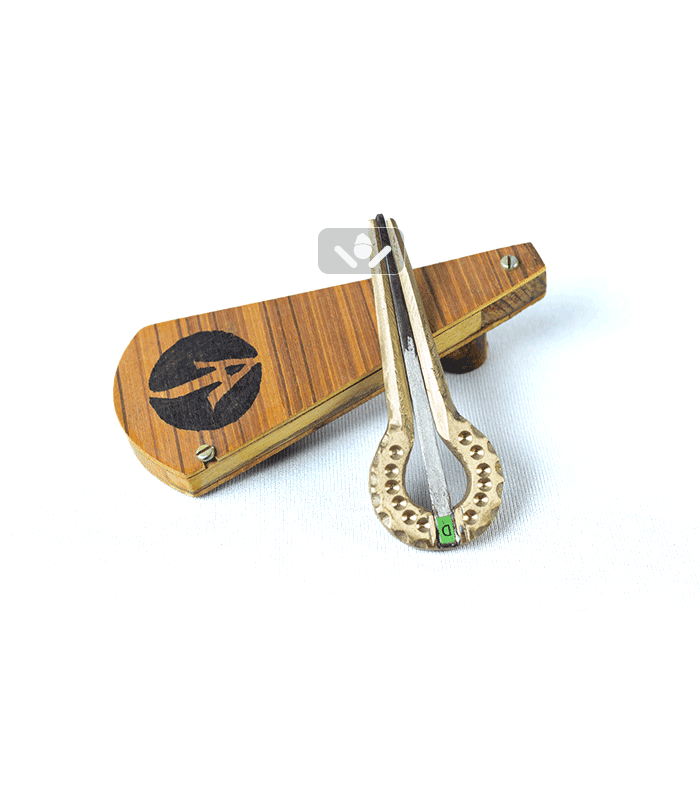
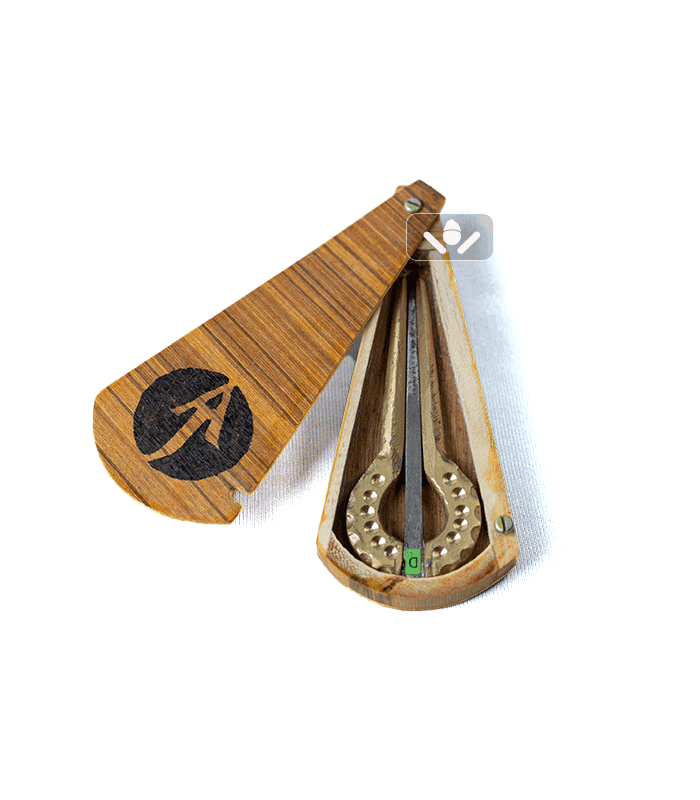


Brass Murchunga [Jaw Harp] (Professional)
₨ 4,790
Buy original Brass Murchunga (Jaw Harp) in Nepal at the best price. Ideal for traditional folk music and sound exploration. Compact, easy to play, rich vibration, handmade by Nepali artisans
-
100% Handmade Brass Instrument
-
Traditional Nepali Folk Sound
- Rich, resonant sound with clear vibration
-
Crafted by Local Artisans
-
Lightweight, Portable, and Easy to Play
-
Ideal for Musicians, Collectors, and Cultural Enthusiasts
- Compact wooden storage case with secure construction
Material: Brass
Handmade in Nepal


Brass Murchunga (पीतल मुर्चुङ्गा) [Jaw Harp] (Professional)– Traditional Handmade Musical Instrument
Feel the sound of the Himalayas travel through your hands before it ever reaches your ears. The Brass Murchunga from Swodeshi is a professional grade, fully handmade Nepali jaw harp, forged by artisan families in the Kathmandu valley using the same metalworking methods their grandparents used. It arrives ready to play, tuned, polished, and packed inside a protective wooden case, so the only thing left for you to do is place it against your teeth and let it hum.
Murchunga (मुर्चुङ्गा), known as Morchang in India, Kubing in the Philippines, and Vargan in Russia, is a traditional jaw harp that produces natural, resonant sounds.
Experience the rhythm of ancient Nepal with the Brass Murchunga, a unique handmade product and a proud symbol of Nepali metalcraft. Also known as the jaw harp, it is one of the oldest musical instruments in the world.
This Murchunga is a small U-shaped metal instrument attached to a flexible alloy. It is played by plucking its alloy strung with its forefinger being gripped among the teeth. It produces calm and soulful music.
At Swodeshi, each Brass Murchunga is expertly handcrafted by skilled artisans using high-quality brass, ensuring durability, tonal clarity, and cultural authenticity. Its compact design and distinctive vibration make it not just a musical tool, but a cultural artifact that represents the soul of Nepali heritage.
The jaw harp comes with a custom wooden case, crafted from layered, striped wood for durability and visual warmth. Compact and protective, the case keeps the instrument safe while making it easy to carry and store. Together, they form a timeless musical tool suitable for beginners, collectors, and experienced players alike.
Whether you’re a music lover, collector, or simply someone seeking to connect with authentic Nepali traditions, the Brass Murchunga makes for a meaningful addition to your collection of handmade products.
Why Musicians Choose the Swodeshi Brass Murchunga
Most jaw harps sold online are mass listed with a photo and a price tag. We build this page differently because we believe you deserve to know exactly what you are buying, who made it, and how to get the best sound out of it from day one.
Solid brass body for a fuller, longer sustaining tone compared to iron alternatives Individually shaped, tempered, and tuned by hand rather than machine stamped Comes with a genuine wooden storage case built from layered striped wood, not a plastic pouch Available in two playing scales, D and F, so you can match your preferred pitch Backed by Swodeshi’s direct relationship with Nepali metalcraft artisans Shipped from Kathmandu with tracked delivery to over 50 countries
Features:
-
100% Handmade Brass Instrument
-
Traditional Nepali Folk Sound
- Rich, resonant sound with clear vibration
-
Crafted by Local Artisans
-
Lightweight, Portable, and Easy to Play
-
Ideal for Musicians, Collectors, and Cultural Enthusiasts
- Compact wooden storage case with secure construction
Shop the Brass Murchunga now at Swodeshi – where traditional metalcraft meets soulful sound.
The Story Behind Every Murchunga
Long before recorded music existed, herders, farmers, and travelers across the Himalayan foothills carried a small metal tool that could turn a quiet evening into music. That tool was the Murchunga. Passed down through generations of Newar metalworkers in the old quarters of Kathmandu, the instrument became part of festivals, courtship rituals, storytelling circles, and quiet personal reflection.
The word Murchunga itself is believed to come from the sound the instrument produces, a soft mechanical hum that mimics a heartbeat when played rhythmically. In Nepali folk tradition it was often played by shepherds passing long hours in the hills and by families gathered for seasonal celebrations. Today the same instrument that once accompanied oral folklore is finding a second life among sound healers, ASMR creators, film composers, and meditation practitioners who value its low, grounding vibration.
At Swodeshi we work directly with brass artisans who have spent decades shaping this exact instrument. Each Murchunga starts as a raw brass rod, which is heated, hammered into a U shape, and fitted with a thin flexible tongue that is the true heart of the instrument. That tongue is what vibrates when plucked, and getting its thickness, curve, and tension correct is a skill that takes years to master. A tongue that is too thick will sound dull and lifeless. One that is too thin will snap or lose its resonance within weeks. Our artisans hand file and test every single piece before it leaves the workshop, so what reaches your door has already passed a real musician’s ear test, not just a factory inspection.
How the Brass Murchunga Actually Works
A Murchunga produces sound through a principle physicists call a plucked idiophone with a drone tone. In plain language, when you pluck the metal tongue while holding the frame lightly against your teeth or lips, the vibration travels into your mouth cavity, which acts as a natural resonating chamber. You are not singing or blowing into the instrument, your mouth simply shapes and amplifies the tone that the metal tongue is already producing.
This is why two people can play the exact same Murchunga and get noticeably different sounds. By changing the shape of your mouth, moving your tongue, adjusting your breath, and shifting your jaw, you control the overtones riding on top of the instrument’s single fundamental note. A beginner can get a clear buzzing tone within the first few minutes. A patient player can eventually shape entire melodic phrases, rhythmic patterns, and even words using nothing but breath and mouth shape layered over that one metal tongue.
Brass Versus Iron, Which Murchunga Should You Buy
Most budget jaw harps sold online, including several from local Nepali sellers, are made from iron because it is cheaper to source and faster to shape. Iron Murchungas have a brighter, sharper, more metallic tone and tend to be lighter in weight. They also rust more easily and require regular oiling to stay in good condition.
Brass, the material used in this professional model, is denser and holds its tuning longer. It produces a warmer, rounder tone with a longer sustain, which is why brass is the material of choice for players who want a fuller sound for recording, performance, or meditation practice rather than casual use. Brass also resists corrosion far better than iron, meaning less maintenance and a longer working life for the instrument. If you are buying your first Murchunga purely to experiment, an iron model is a fine entry point. If you want an instrument that will still sound rich a decade from now, brass is the clear choice, and it is the only material we use for this professional listing.
How to Play Your Murchunga, a Beginner’s Guide
Getting a clean sound from your first Murchunga usually takes less time than people expect. Follow these steps and you will likely produce a clear tone within your first practice session.
Hold the two prongs of the frame lightly between your front teeth or against your slightly parted lips. Do not clamp down, a firm but gentle grip is all you need.
Keep the metal tongue pointing away from your face, positioned so your finger can pluck it freely without hitting your lips.
Pluck the tip of the tongue with your index finger using a quick, relaxed flick, not a hard strike. The vibration does the work, not your strength.
Breathe normally and experiment with inhaling and exhaling while the tongue vibrates. This is where the instrument’s real character appears.
Shape your mouth cavity by moving your tongue, jaw, and cheeks. Try saying silent vowel shapes like ah, ee, and oh while plucking to hear the tone shift dramatically.
Practice in short five to ten minute sessions daily rather than long irregular ones. Jaw harp playing is a muscle memory skill, and consistency beats intensity.
Once comfortable, experiment with rhythm by plucking in steady patterns, then try syncing your breathing to create a pulsing, meditative drone that many players describe as trance like.
Caring for Your Brass Murchunga
Brass is naturally more resistant to moisture damage than iron, but a little care will keep your instrument sounding its best for years.
Wipe the instrument dry after each playing session, particularly around the tongue, since saliva contact is unavoidable given how the instrument is played.
Store it inside the included wooden case when not in use, away from direct humidity or extreme temperature swings.
Avoid bending the tongue or prongs, and never force the tongue past its natural resting position when plucking.
If the tone begins to dull over time, a very light polish with a soft brass cleaning cloth will usually restore its shine and clarity.
Keep the instrument away from young children unless supervised, since the flexible metal tongue is not a toy component.
Who This Instrument Is For
Musicians and composers looking to add a distinctive drone or rhythmic texture to folk, ambient, or experimental recordings.
Meditation and sound healing practitioners who use the Murchunga’s low resonant hum as a grounding tool during breathwork or sound bath sessions.
Collectors of authentic world instruments who want a verified handmade piece rather than a factory produced import.
Travelers and cultural enthusiasts seeking a compact, meaningful souvenir that represents genuine Nepali craftsmanship rather than a mass produced trinket.
Teachers and students of ethnomusicology who want a functioning example of one of the world’s oldest instrument families for study or performance.
Why Buy From Swodeshi
Swodeshi works directly with registered Nepali artisan cooperatives, meaning your purchase supports real metalworking families rather than an anonymous supply chain. Every Brass Murchunga listed here is handmade to order or drawn from small verified batches, not mass imported from unnamed factories. We ship from Kathmandu with tracked international delivery, accept international cards as well as local Nepali payment methods including eSewa and Khalti, and back every order with our standard returns and exchange policy. When you buy this instrument, you are buying a functioning piece of Nepal’s living musical heritage, packaged and shipped with the same care that went into shaping it.
What’s Included
-
1 × Metal jaw harp
-
1 × Wooden protective case
FAQ on Murchunga/Jew Harp
What is a Murchunga?
A Murchunga is a traditional Nepali jaw harp, a small U shaped metal instrument played by plucking a flexible metal tongue while holding the frame against the teeth or lips.
Are jaw harps safe for teeth?
Yes, jaw harps are generally safe for teeth when played correctly. The instrument should rest lightly against the teeth or lips without biting down. Using gentle pressure and proper technique helps prevent any risk of damage.
Is the Murchunga hard to learn?
No, producing a basic sound is easy and most beginners get a clear tone within minutes, though mastering rhythm, breath control, and melodic shaping takes regular practice over weeks and months.
Are jaw harps safe for teeth?
Yes, when played correctly with light pressure resting against the teeth rather than biting down, jaw harps are safe and will not damage healthy teeth.
Are jaw harps hard to play?
Jaw harps are easy to start but take practice to master. Beginners can produce sound quickly, but controlling rhythm, tone, and melody improves with experience.
What is a jaw harp used for?
Jaw harps are used for traditional folk music, meditation, rhythm accompaniment, and sound exploration. They are common in many cultures around the world and are also popular in modern experimental and ambient music.
Do jaw harps only play one note?
A jaw harp produces one fundamental note, but players create different sounds and melodies by changing mouth shape, breathing, and tongue movement. This allows a wide range of tones and overtones.
Why is this listed as a professional model?
Because it uses solid brass construction, individually hand tuned reeds, and a protective wooden case, distinguishing it from lower cost beginner or novelty jaw harps.
Can the Murchunga be used in modern music production?
Yes, its distinctive drone and rhythmic texture make it popular among ambient, folk, and experimental musicians as well as film and game sound designers.
Is the Murchunga featured in Nepali culture and festivals?
Yes, it has traditionally been played during folk gatherings, storytelling, and festivals across Himalayan communities including Newar, Tamang, and Kirant traditions.
What payment methods does Swodeshi accept?
Swodeshi accepts international payments through Visa, Mastercard, and American Express, along with local Nepali payment methods including eSewa, Khalti, and direct bank transfer.
How do I ship this within Nepal?
Orders within Kathmandu typically arrive within two days, while deliveries outside Kathmandu take between three and five days.
Where is this Murchunga made?
It is handmade in Nepal, in the Kathmandu valley, by local metalworking artisans using traditional brass casting and shaping techniques.
You must be logged in to post a review.
Related products



Reviews
Clear filtersThere are no reviews yet.