


Types of Haku Patasi: Materials, Border Details, and Regional Identity in Newari Tradition

Introduction
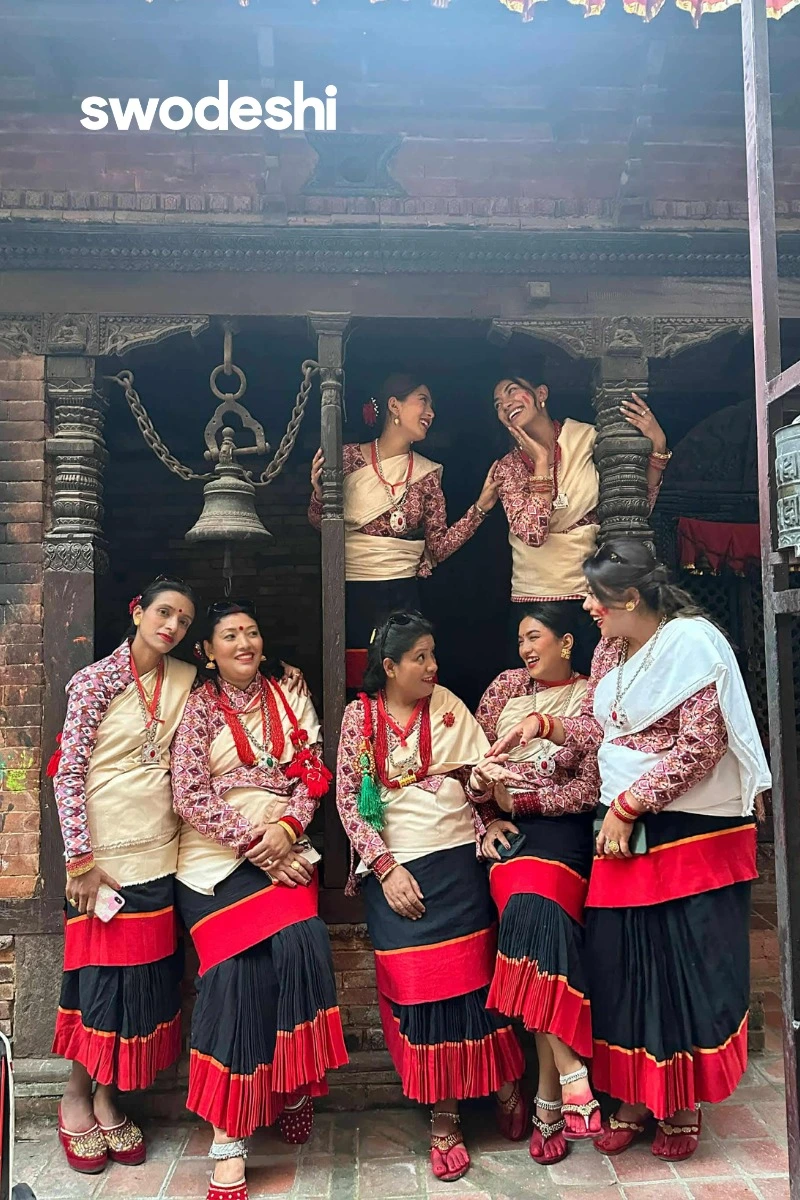
Being born into the Newari community, Haku Patasi was once just another traditional dress to me, familiar yet unexplored. I mostly saw elderly women wearing it while going to temples, carrying a kala in their hands. Many of them had tattoos on their legs, between the calf and the foot, which were often visible as the saree was worn a little higher, maybe for comfort, maybe to proudly show the tattoo.
I still remember traveling by bus to our mamaghar in Banepa, passing long stretches of fields along the way. Women working in those fields, dressed in sarees, is an image that has never left my mind. Against green or golden fields, their black and red attire stood out beautifully.
While working, they would sing and sometimes even dance. Those moments felt so alive that I often wished I were an artist who could capture them on canvas. The scene, the colors, the rhythm, it all felt deeply rooted and natural.
Much later, after I started Swodeshi, I began noticing subtle differences in fabric, patterns, and colors of Haku Patasi. While writing product descriptions to share accurate information, I realized how little I actually knew. That was when my real journey of exploring Haku Patasi truly began.
Discovering Haku Patasi: Research Journey
I googled a lot but didn’t find much content on Haku Patasi. So, I decided to go straight to the source—asking the weavers who have been making these fabrics for generations, expert members of the community, and relatives with deep knowledge of the tradition. Through these conversations and research, I discovered that the “types” of Haku Patasi are not defined by brand or trend, but by:
- Material used
- Border detailing
- Regional identity within the Kathmandu Valley
- Climate and purpose of wear
Historically, Haku Patasi started during the Malla Dynasty, somewhere between the 12th and 18th centuries. The black body of the saree is said to symbolize fertile soil, while the red border represents life, divinity, and power. One article I came across mentioned that black dye was traditionally made from the indigo plant, and red from insect lac, but this still needs to be verified.
At the heart of every Haku Patasi is this black base. From there, diversity emerges through fabric choices and delicate borders, reflecting both tradition and adaptation over time.
Types of Haku Patasi Based on Material
1. Cotton Haku Patasi
Cotton is the most traditional material and has been a staple for generations.
Why it matters:
- Breathable and comfortable
- Perfect for long hours of wear
- Ideal for festivals and rituals in moderate climates
Historically handwoven, cotton Haku Patasi suited the lifestyle of Newari women perfectly. Even today, many prefer it for its authenticity and comfort—it’s the classic choice that never goes out of style.
2. Woolen–Cotton Mixed Haku Patasi
When the weather turns cooler, wool–cotton blends come into play.
Key points:
- Slightly thicker than pure cotton
- Provides warmth while staying manageable
- Maintains the traditional look
This blend shows how Haku Patasi adapted to seasonal needs without losing its cultural identity.
3. Chiffon Haku Patasi
Chiffon is a more recent adaptation, bringing lightness and flow.
Why it’s popular:
- Extremely lightweight
- Soft, flowing drape
- Easy to wear and manage
For women living outside the Kathmandu Valley or abroad, chiffon is practical—easy to carry, pack, and wear, especially in hot and humid climates.
4. Georgette Haku Patasi
Georgette strikes a balance between structure and comfort.
Characteristics:
- Slightly heavier than chiffon
- Durable and less transparent
- Keeps its shape during long events
It is often chosen for cultural programs or ceremonies, where the saree needs to look neat over hours of celebration.
The Black Base: One Constant
No matter the fabric, the black body of Haku Patasi remains constant. In Newari tradition, black symbolizes fertile soil and stability, while red represents life, divinity, and power. These colors carry deep cultural meaning and serve as the foundation of every Haku Patasi.
While the black base unites all Haku Patasi, it is the borders that bring individuality and identity to each piece.
Border Detailing and Regional Identity
All Haku Patasi share a red border, but subtle differences in the line between black and red reflect regional identity. These details are often recognized through oral tradition, the weaver’s knowledge, and community practice.
One of my relatives who lives in Patan explained these differences to me personally, which made the distinctions much clearer:
- Patan (Lalitpur): Red border with a thin orange line—an understated but distinct marker of Patan’s style.
- Kathmandu: Red border with a thin green line—a quiet yet meaningful sign of Kathmandu identity.
- Bhaktapur: Red border appears slightly brighter or glittery, achieved through thread choice, adding richness for festivals.
To outsiders, these differences may seem minor. But within the Newar community, they speak volumes about belonging, heritage, and locality. Hearing it directly from someone in Patan added a personal layer to my understanding, showing that these subtle details are living traditions, recognized and valued across generations.
Why Border Details Matter
Traditionally, clothing was a form of silent communication. The borders of Haku Patasi conveyed:
- Regional roots
- Community identity
- Cultural continuity
These fine details allowed people to recognize origins without a single word—a quiet, powerful expression of culture.
Haku Patasi and Climate: Adapting Beyond Kathmandu
As Newari families migrated, especially to the Terai, the climate naturally influenced fabric choices. Many women started using lightweight chiffon and georgette, which seemed to suit practical needs, even if some of these reasons are based on observation and logical reasoning rather than confirmed sources:
- Hot and Humid Weather: Chiffon allows air circulation, while georgette provides structure with moderate breathability.
- Easy to Carry and Wear Abroad: Both fabrics fold easily, take up little space, and are convenient for cultural occasions.
- Comfort for Long Rituals: Lighter fabrics reduce discomfort during extended ceremonies and events.
- Practical for Modern Living: Easier to wash, less bulky, and ideal for women who wear Haku Patasi occasionally rather than daily.
These adaptations are not a break from tradition—they represent a practical evolution, helping Haku Patasi remain wearable and relevant across different climates, lifestyles, and regions.
Traditional and Modern Types: Coexisting
Today, cotton, chiffon, and georgette Haku Patasi exist side by side. Each serves a purpose:
- Cotton preserves heritage and authenticity
- Chiffon and georgette ensure accessibility and comfort
This coexistence keeps Haku Patasi relevant, no matter where or how Newari women live.
Choosing the Right Haku Patasi
When picking a Haku Patasi, people usually consider:
- Climate and location
- Occasion and duration of wear
- Ease of handling
- Personal or family tradition
Understanding these types ensures that every choice respects both culture and comfort.
Preserving Diversity Within Tradition
Though it may look like a single garment, Haku Patasi is a collection of variations—shaped by:
- Material
- Border detailing
- Regional identity
- Climate and migration
Preserving these nuances is as important as preserving the attire itself. Each piece tells a story, carries heritage, and connects generations.
Conclusion
Haku Patasi is more than just a saree—it’s a living tradition, a symbol of Newari identity, and a testament to cultural continuity. If you have additional insights, corrections, or stories about Haku Patasi, I would love for you to share them in the comments.
And if you’re interested in buying Haku Patasi, other Newari dresses, or cultural wears, you can explore a wide selection at Swodeshi.com. Every piece carries tradition, authenticity, and care—perfect for wearing, gifting, or celebrating Newari heritage.
