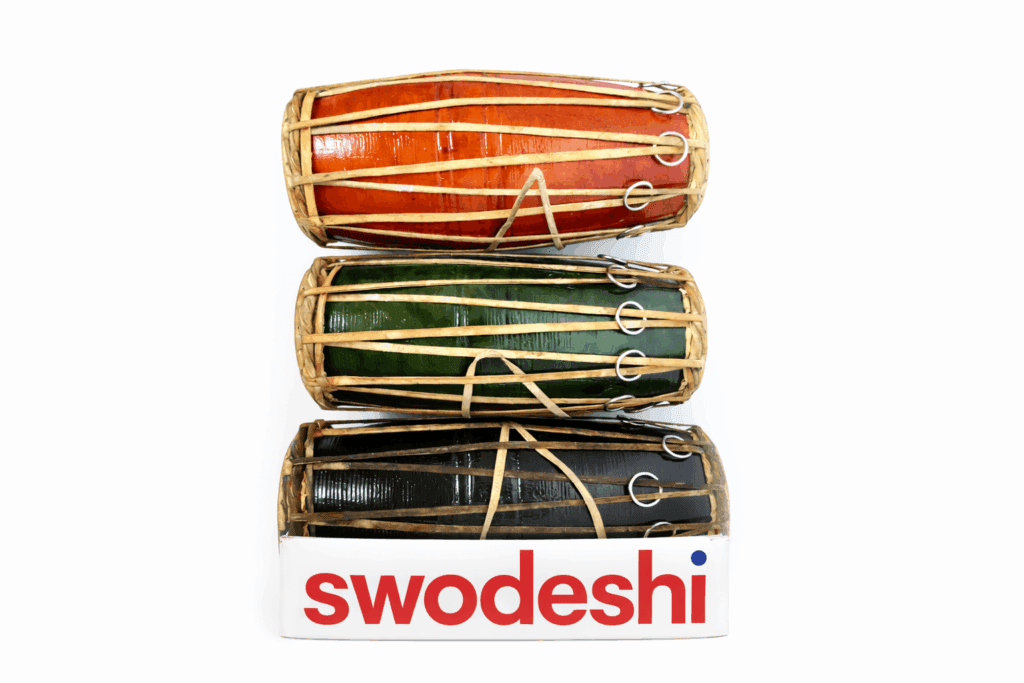
The Madal (Nepali: मादल), also written as Maadal, is a traditional Nepali folk musical instrument and one of the most iconic hand drums of Nepal. It plays a vital role in Nepali folk music, mainly used for rhythm and beat keeping. Due to its deep cultural roots and versatile sound, the madal is widely played across villages, festivals, and cultural performances throughout Nepal.
What Is a Madal?
The madal is a double-headed hand drum with a cylindrical wooden body and a slight bulge at the centre. One drumhead is slightly larger than the other, allowing musicians to produce different tones on each side. It is usually played in a horizontal position while seated, using both hands to strike the drumheads simultaneously, creating complex and lively rhythms.
Cultural Importance of the Madal in Nepal
Recognised as the national musical instrument of Nepal, the madal is considered the backbone of most traditional Nepali folk songs. From weddings and religious ceremonies to local dances and cultural events, the madal remains central to Nepal’s musical identity. Its rhythmic patterns bring energy and structure to folk performances, making it an essential instrument in Nepali culture.
Madal in Modern and Bollywood Music
The madal gained international recognition when renowned Nepali musician Ranjit Gazmer introduced it to Bollywood music while working with legendary composer Rahul Dev Burman. The instrument can be heard in several popular Bollywood songs, such as Hum Dono Do Premi and Kanchi Re Kanchi Re, helping showcase Nepali musical heritage to a global audience.
Madal Price in Nepal
The price of a madal in Nepal varies depending on size, quality, craftsmanship, and whether it’s handmade or machine-made. Here’s a comprehensive price breakdown:
Current Market Prices:
Small Size Madal
- Price Range: Rs. 1,750 – Rs. 1,900
- Weight: Approximately 1 kg
- Best for: Beginners and children
Medium Size Madal
- Price Range: Rs. 2,500 – Rs. 4,000
- Weight: 1-1.5 kg
- Best for: Regular practice and local performances
Large/Professional Madal
- Price Range: Rs. 4,000 – Rs. 8,000
- Weight: 1.5-2 kg
- Best for: Professional musicians and stage performances
Studio Grade/Premium Madal
- Price Range: Rs. 10,000 – Rs. 40,000 (USD 75-300)
- Features: Superior craftsmanship, best quality wood and leather
- Best for: Recording studios and professional musicians
Factors Affecting Madal Prices:
- Size and Dimensions: Larger madals cost more due to increased material requirements
- Wood Quality: Premium woods like teak and sal are more expensive
- Leather Quality: Double-layered goat skin is standard, but quality varies
- Craftsmanship: Handmade madals command higher prices
- Brand/Manufacturer: Established makers charge premium rates
- Additional Features: Adjustable strings, carrying bags, and decorative carvings
How to Identify a Quality Madal
When shopping for a madal in Nepal, look for these quality indicators:
- Wood Quality: Check for solid hardwood (preferably teak or sal) without cracks or splits
- Drumhead Condition: The goat skin should be taut, smooth, and free of tears
- Khari Paste: The black paste should be evenly applied and firmly attached
- Sound Test: Both heads should produce clear, resonant sounds without buzzing
- Leather Straps: Should be sturdy and properly secured for tuning
- Weight Balance: The madal should feel balanced when held horizontally
- Craftsmanship Details: Look for smooth finishes and well-carved edges
Where to Buy Madal in Nepal
Physical Stores:
- Audio Shop Nepal (Boudha, Kathmandu): Offers high-quality madals at exclusive prices
- Nepal Music Gallery: Provides various sizes with quality guarantees
- Indrayani Music Shop: Known for crafting exceptional musical instruments
- Thamel Music Shops: Multiple stores offering competitive prices
Online Options:
- swodeshi.com
- iMartNepal.com
- AudioShopNepal.com
- MusicGallery.com.np
- Daraz.com.np
- Hamrobazaar.com
Most reputable sellers offer:
- Free or affordable delivery across Nepal
- Return policies (typically 2-14 days)
- International shipping options
- Quality guarantees
- Phone or online customer support
Caring for Your Madal
To ensure your madal lasts for years:
Regular Maintenance:
- Wipe goat skin heads with a soft, dry cloth after each use
- Dust the wooden body regularly with a microfiber cloth
- Avoid using water or harsh chemicals on the drumheads
- Store in a cool, dry place away from direct sunlight
- Adjust the leather strap tension periodically for proper tuning
Tuning: The madal doesn’t have a fixed tuning and can be adjusted by tightening or loosening the leather strips. A well-tuned madal produces clear, resonant sounds. Professional musicians recommend checking tension regularly.
Cultural Significance and History
The madal originated in the Magar community of Nepal and is believed to have derived from the mardal, which came from the classical Indian instrument called mridung. The instrument has been an integral part of Nepali culture for centuries and continues to be essential in:
- Folk music performances (lok geet and dohori)
- Wedding ceremonies and welcome parties
- Religious and cultural festivals
- Modern Bollywood music (introduced by musician Ranjit Gazmer)
- Musical recordings and videos
- School music programs
FAQ on Madal Price in Nepal
What is Madal called in English?
Madal is best described in English as a traditional Nepali hand drum or double-headed folk drum. Just calling it “drum” is correct but too generic.
What is Khari in Madal?
Khari is the black tuning paste applied on the madal skin to improve sound quality.
Khari actually means the black tuning paste applied on the drum skin of the madal. It helps control tone and pitch, similar to the black spot you see on tabla.
What are the 5 traditional musical instruments of Nepal?
Madal, Sarangi, Bansuri, Damphu, and Murchunga are all widely accepted as traditional Nepali instruments.
What are the 4 types of instruments?
Aerophones, Chordophones, Idiophones, and Membranophones is the standard global classification.
What is Madal made of?
Madal is made from a wooden body with animal skin stretched on both sides.
What are the top 10 most popular instruments?
Piano, Guitar, Violin, Drums, Flute, Trumpet, Saxophone, Sitar, Harp, and Cello are widely popular instruments.
Conclusion
The madal is more than just a musical instrument, it’s a piece of Nepali heritage and cultural identity. Whether you choose a handmade or machine-made madal depends on your budget, skill level, and long-term musical goals.
For serious musicians and those who value authentic sound quality, investing in a handmade madal is worth the extra cost. The superior craftsmanship, resonant tones, and durability make it a valuable instrument that can be passed down through generations.
For beginners or casual players, a machine-made madal offers an affordable entry point to learn this beautiful traditional instrument without a significant financial commitment.
Regardless of your choice, purchasing from reputable sellers in Nepal ensures you get an authentic instrument that contributes to preserving this important aspect of Nepali musical heritage. The rhythmic beats of the madal continue to bring joy, energy, and cultural connection to people across Nepal and around the world.